An invoice arrives by email, a receipt stays in a vehicle, and a supplier payment is made from the wrong account. None of these events feels significant on its own. Together, they can leave a business owner spending hours reconstructing a month that should already be closed.
Good bookkeeping makes transactions understandable while the details are still available. The aim is to create records you can use for reporting, customer follow-up and tax preparation without having to rediscover the story behind every payment.
This checklist is designed for South African small businesses, including owners working from Pretoria and Centurion. It focuses on a manageable routine rather than a particular software product. The best system is one your team can follow consistently.
Decide where the records will live
Choose a central place for invoices, receipts, statements and explanations. Separate the records by business entity and period, and agree a naming convention that makes sense to everyone who contributes information.
Keep original documents where required and make electronic copies readable. A photograph that cuts off the supplier name or total may not provide the evidence needed later. Check the document when it is captured, while obtaining another copy is still straightforward.
Assign responsibility for collecting information. If three people assume someone else has saved an invoice, the document can disappear even when all three remember seeing it.
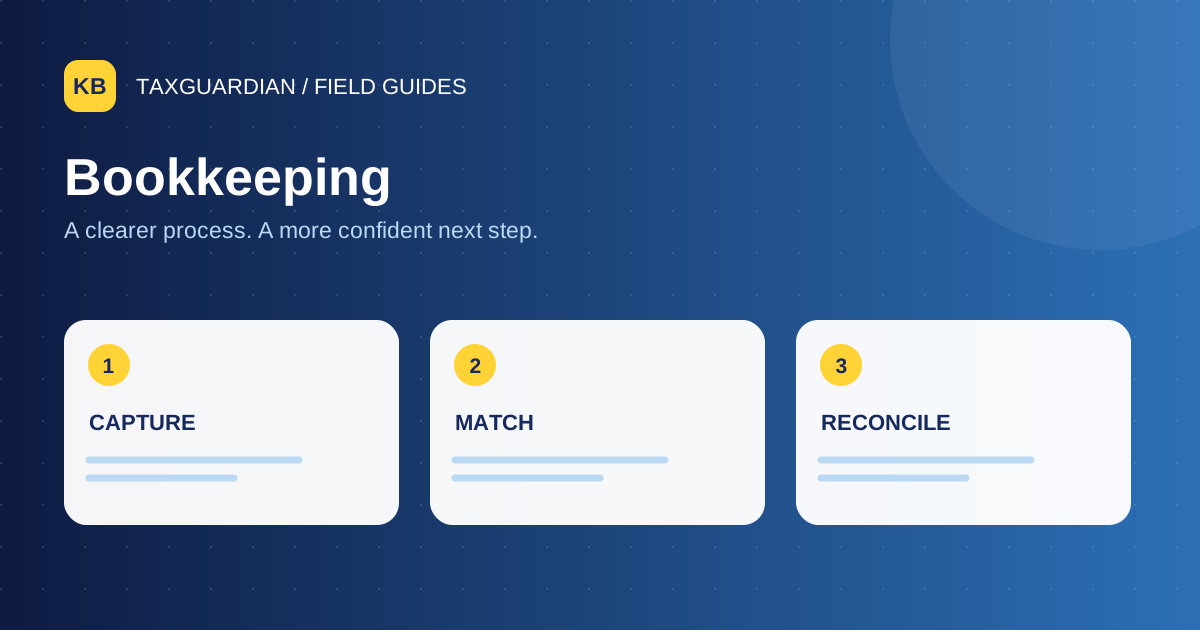
1. Capture sales completely
Check that completed work and delivered goods have been invoiced according to the agreed arrangements. Review cancelled invoices and credit notes so that changes have a clear explanation and supporting record.
Match receipts to the correct customer invoices. A deposit, an advance payment and settlement of an old invoice may all appear as incoming money, but they do not tell the same story. Avoid categorising every bank deposit as current sales.
Maintain a list of unpaid invoices with contact details and payment commitments. This turns bookkeeping into a practical support for collections, instead of leaving overdue amounts hidden until the end of the year.
2. Match expenses to supporting evidence
For each expense, retain the relevant invoice or receipt and record what the purchase was for. A bank statement shows movement of money; it does not always explain the nature of the expense or provide all the information needed for its tax treatment.
Separate personal purchases from business costs. When an owner pays a business expense personally, record the transaction clearly rather than ignoring it or entering it a second time when reimbursement occurs.
Do not assume that a cost is deductible simply because it was paid from a business account. Ask for advice where the business purpose, allocation or tax treatment is unclear.
3. Reconcile every relevant account
Compare the bookkeeping records with bank and payment-provider statements. Investigate missing transactions, duplicate entries and differences between recorded balances and actual statements.
Include credit cards, loan accounts and payment gateways where relevant. When a payment provider deducts fees before transferring the balance, the net deposit may need to be reconciled against the gross sales and separate charges.
Transfers between your own accounts should not inflate sales or expenses. Check both sides of the transfer and use consistent references. A reconciliation should explain the difference, not simply force the figures to agree.
4. Review customer and supplier balances
An unpaid supplier invoice may be genuine, duplicated or already settled but allocated incorrectly. Review statements and investigate old balances before making another payment.
Do the same for customers. Ask whether an outstanding invoice is awaiting approval, disputed or overdue. Where a credit note is required, document why it was issued and make sure it is reflected consistently.
An illustrative Centurion maintenance business might discover that a customer payment was allocated to the wrong invoice. Correcting that allocation prevents unnecessary chasing and gives the owner a more accurate view of collections. It does not create new income; it makes the existing record reliable.
5. Give payroll and tax records their own checks
Where the business has employees, reconcile payroll reports with salary payments and relevant liability accounts. Investigate adjustments rather than carrying unexplained differences into the next month.
For a VAT-registered business, review the information supporting VAT classifications and claims. Not every expense contains claimable input VAT, and a software default should not be treated as confirmation of the correct treatment.
Keep filing records and payment confirmations alongside the underlying calculations. Our PAYE and VAT administration guide explains how to organise these related workflows without treating them as the same tax.
6. Close the month with a query list
Before producing reports, review uncategorised transactions, missing documents and unusual entries. Give every unresolved item a next action and a person responsible for supplying the information.
Keep changes traceable. If a transaction is corrected after a report was issued, identify the affected period and explain whether the report needs to be replaced. Silent changes make it difficult to compare figures or answer later questions.
Use a simple completion checklist: accounts reconciled, sales reviewed, supplier balances checked, payroll matched and unresolved queries recorded. The checklist should reflect the business rather than become another document nobody reads.
Keep records for the right period
SARS sets record-retention requirements, and the timing depends on the circumstances. For a submitted return, its guidance generally measures five years from submission. Audits, investigations, outstanding returns and disputes can affect what must be retained. Check the official record-keeping guidance before deleting records.
Build retention into the filing system. Do not rely on an employee’s phone, a single laptop or an inbox that may be closed when someone leaves. Agree access arrangements and a backup process that preserves the documents you need.
Frequently asked questions
Is a spreadsheet enough?
It may suit a simple business if it is accurate, controlled and supported by proper records. As transactions, users or reporting needs increase, dedicated software may become more practical. Choose the system around the work and the controls it needs.
What if several months are behind?
Start by establishing the missing periods and obtaining complete statements and source documents. Work through a defined catch-up plan, while keeping the current month organised. Guessing old transactions usually creates more work when the figures are reviewed.
Should I wait until tax season?
Regular bookkeeping makes it easier to identify missing information and understand the business throughout the year. Waiting can leave you chasing documents long after the details have been forgotten.
Build a routine you can maintain
Start with one complete month and a clear handover process. KB TaxGuardian provides bookkeeping support for businesses in Pretoria and the surrounding area, with remote service across South Africa. Speak to Kayla about your records, outstanding periods and the next practical step.
Published by KB TaxGuardian. General educational information, checked against the linked SARS guidance on 20 October 2026. Your circumstances and the current rules determine the advice you need.
Meet Kayla Bester →