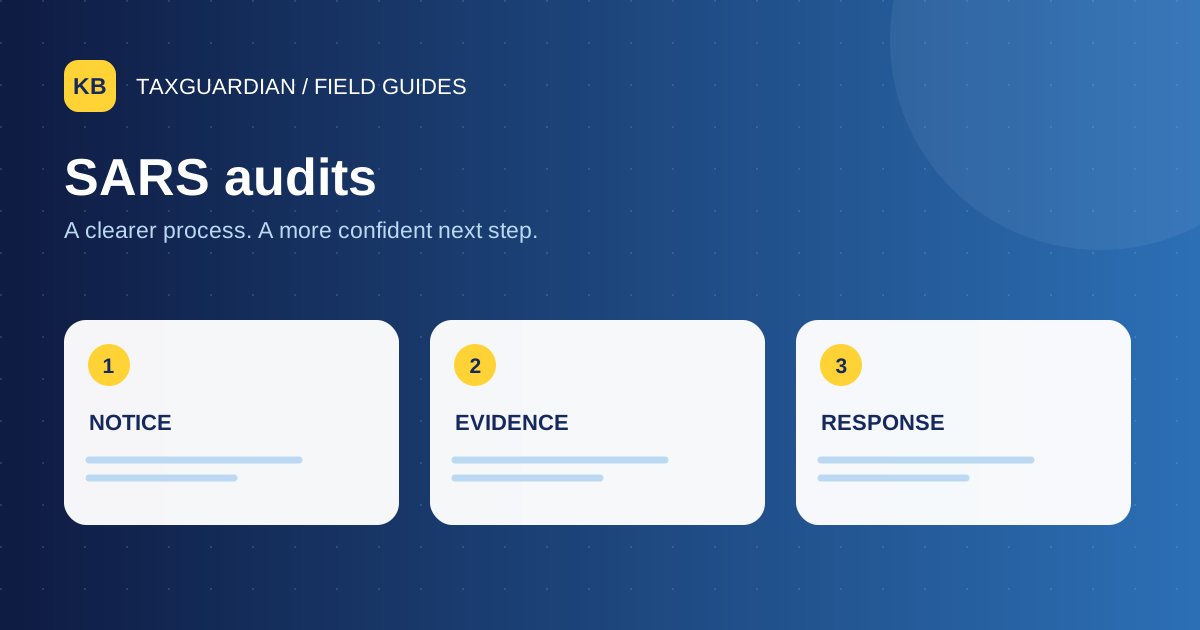
A SARS notification can interrupt an otherwise ordinary working day. You may be unsure whether something is wrong, which documents are needed or how quickly you must respond. The most useful first step is to read the actual notice and establish what SARS is asking for.
An organised response begins with the correct tax period, the scope of the request and the evidence behind the figures. It should make your position understandable without burying the relevant information in unrelated attachments.
This guide provides a practical preparation process for individuals and businesses in South Africa. It does not predict an outcome or replace a review of your notice. Use it to organise the information before deciding how to respond.
Understand which process applies
SARS distinguishes verification from audit. Verification checks information declared against supporting information, while an audit involves an examination of the relevant records. Being referred for an audit is also different from receiving the notice that the audit has formally begun. The SARS audit and verification guidance explains these distinctions.
Identify the exact notice, tax type, period, reference and response date. If the wording is unclear, obtain clarification before assuming that advice about another taxpayer’s experience applies to yours.
Keep the notice with the working file. Everyone helping with the response should be working from the same request.
1. Verify the communication safely
Review correspondence through the appropriate official SARS channel. Be cautious about unexpected links or requests for passwords. Access eFiling through a trusted route rather than relying on a link in an unfamiliar message.
Record when the notice was received and who will coordinate the response. If an adviser is involved, confirm the authorised arrangements and the scope of their work.
Avoid forwarding sensitive records to multiple people simply to obtain quick opinions. Tax documents can contain identity information, bank details and information about employees or customers. Agree how the records will be shared before sending them.
2. Turn the request into a document index
Create a checklist with one row for each requested item. Include the period, file name, person supplying it and whether it has been checked. This makes omissions visible before the submission stage.
Distinguish documents you have from documents you still need to obtain. If an invoice is missing, ask the supplier for a copy rather than constructing replacement evidence. Where something cannot be obtained, discuss how to explain that fact accurately.
Name files clearly. A label such as “Bank statement March” is more useful than “scan-final-3”, but avoid exposing unnecessary personal information in file names.
3. Reconcile documents to the declared figures
A bundle of documents is not automatically an explanation. Work through how the records support the amount declared in the return. Investigate differences before the pack is submitted.
For example, an illustrative self-employed consultant may have invoices, bank deposits and credit notes that do not total the same amount. The difference might relate to timing, unpaid invoices or another transaction. Establish the explanation from the records rather than choosing whichever total looks preferable.
Use a reconciliation schedule where helpful. Show the starting amount, relevant adjustments and resulting figure, with references to the supporting documents. Keep calculations understandable to someone who did not prepare them.
4. Explain facts without filling gaps with guesses
Keep written explanations specific to the request. Identify what happened, when it happened and which evidence supports it. Avoid broad claims such as “all expenses are business-related” when individual transactions need explanation.
Separate confirmed facts from information still being checked. If an earlier explanation was incorrect, address the correction clearly and preserve the record of what changed.
Do not alter original records to make them fit a preferred result. A discrepancy is something to investigate and explain. Concealing it can create a more serious problem than the original bookkeeping error.
5. Check the pack before submitting
Review legibility, completeness and the order of the files. Confirm that the correct taxpayer and period appear throughout. Remove unrelated duplicates, while preserving documents needed to support the response.
Follow the submission instructions and deadline in the notice. SARS’s guidance emphasises completing the submission step after uploading documents; an uploaded file should not be assumed to have been sent. Save the confirmation and the exact version of the pack submitted.
If you cannot meet a deadline, seek guidance promptly about the appropriate next step. Do not assume that sending a general email automatically extends the time available.
6. Keep a correspondence and outcome log
Record each request, response, submission reference and follow-up. Keep the responsible person and next review date visible so that a new message does not disappear into an inbox.
When an outcome arrives, compare it with the issue under review. Confirm whether further information, a payment or another action is required. A closed task in your internal checklist should be supported by the actual correspondence.
If you disagree with an assessment or decision, obtain advice on the relevant dispute route and timing. Our guide to disagreeing with a SARS assessment explains how to prepare that discussion.
Improve the records after the immediate response
Once the immediate work is under control, identify what made preparation difficult. Missing invoices, unclear expense descriptions or inconsistent reconciliations can be addressed through a better monthly process.
The objective is not to promise that you will never receive another request. It is to make your records easier to explain and retrieve. Our bookkeeping guide provides a practical routine for doing that.
Frequently asked questions
Does selection mean I did something wrong?
Selection alone does not establish wrongdoing. Read the notice and respond to the actual request. Avoid assuming either that there is a serious finding or that the matter can be ignored.
Can someone guarantee the outcome?
No responsible preparation process can guarantee SARS’s decision or a refund date. The focus should be accurate evidence, a clear response and attention to the applicable process.
What should I bring to an initial discussion?
Start with the notice, relevant return, assessment and a list of available documents. Describe the deadline without sending sensitive files through a public website enquiry. Agree a suitable sharing process first.
Get help organising your response
KB TaxGuardian offers SARS audit support for clients in Pretoria and Centurion, with remote assistance across South Africa. Contact Kayla to discuss the notice, the information available and the support needed for a clear response.
Published by KB TaxGuardian. General educational information, checked against the linked SARS guidance on 20 October 2026. Your circumstances and the current rules determine the advice you need.
Meet Kayla Bester →