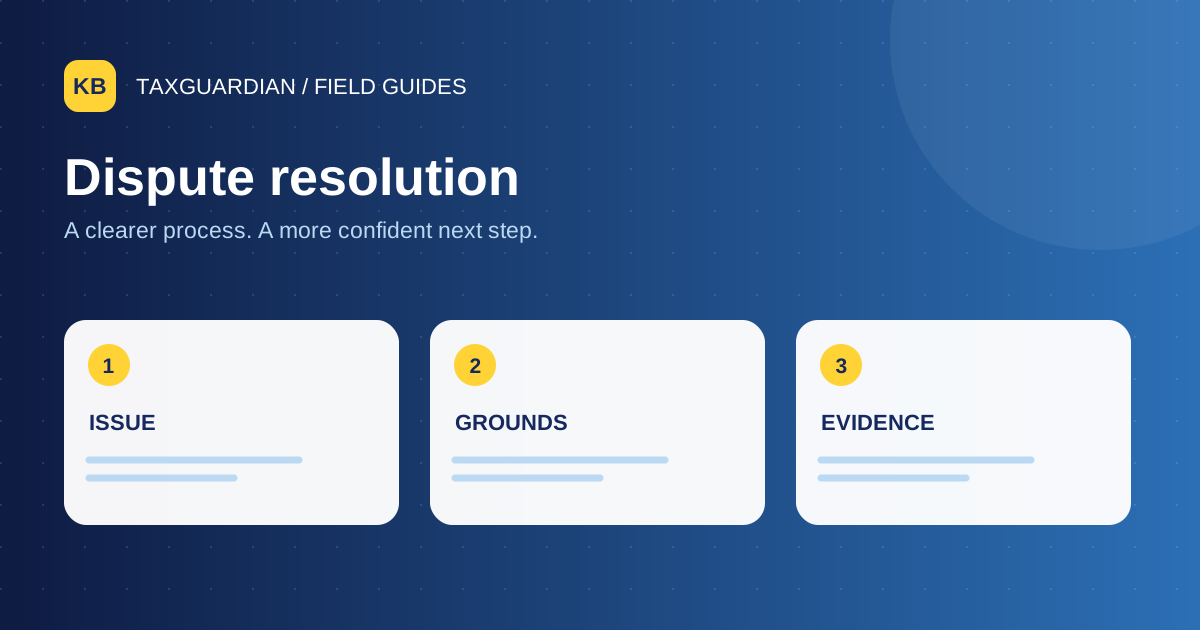
An assessment that differs from your expectation can be frustrating, particularly when you believe the supporting documents explain your position. The next step is to identify exactly what changed and which process applies. A general complaint, a correction and a formal objection are not interchangeable.
Good preparation turns “this amount is wrong” into a clear account of the disputed issue, the relevant facts and the evidence supporting your position. It also helps you recognise deadlines before the opportunity to respond becomes more complicated.
This guide explains a practical starting point for South African taxpayers. It is not a personalised legal opinion. The appropriate route depends on the assessment or decision, the tax type and what has already happened.
Establish what you are disagreeing with
Save the assessment or decision, the original return and any related correspondence. Identify the date, tax period and amount involved. Separate the disputed adjustment from amounts that are not in question.
Read the explanation provided. Is the issue missing evidence, an amount recorded incorrectly, the treatment of an expense or a different interpretation of the facts? Understanding the actual issue helps you avoid arguing a point SARS has not raised.
Where the reasons are insufficient, ask about the appropriate procedure for requesting reasons. Do not fill an information gap with assumptions about why a deduction was disallowed.
1. Choose the correct route
A correction may be relevant to an error in information you submitted, subject to the applicable process and restrictions. An objection addresses an assessment or decision through the prescribed dispute process. A service complaint addresses service or administrative concerns.
SARS’s complaints guidance directs disagreements with assessment outcomes to the dispute process. Sending a complaint should therefore not be treated as a substitute for a valid objection.
Ask which route fits your issue before preparing a long submission. If more than one process is relevant, keep the purpose and deadline of each clear.
2. Confirm the deadline immediately
SARS’s published objection guidance generally provides an 80-business-day period, with specific starting points where reasons have been requested. Confirm how the current rules apply to your notice rather than counting ordinary calendar days.
Record the relevant dates and ask for advice early if the period may have expired. Do not assume an extension will be available or granted.
Keep evidence of the notice and any requests already made. The chronology can matter as much as the underlying calculation when determining the next procedural step.
3. Build the factual explanation
Write a short chronology of the events relevant to the disputed amount. Include what was declared, what SARS changed, the explanation given and the documents already supplied.
Then identify the specific grounds of disagreement. Avoid repeating that the outcome feels unfair without explaining the error you believe has occurred. Connect each point to the relevant facts and, with appropriate advice, the applicable tax treatment.
For an illustrative business expense dispute, useful preparation might identify the supplier, business purpose, invoice, payment and how the amount was recorded. That does not guarantee deductibility; it gives the issue a factual basis for review.
4. Organise evidence around each issue
Create an index that links each disputed item to its supporting documents. Use legible copies and consistent references so the reader can follow your argument without searching through unrelated material.
Identify missing documents and contradictions before submitting. If the invoice, accounting records and explanation do not agree, investigate why. Repeating an error in a formal objection does not make it more persuasive.
Preserve original records and earlier correspondence. If new information changes your understanding, discuss the effect on the proposed objection rather than quietly replacing the previous explanation.
5. Treat payment as a separate question
Do not assume that lodging an objection automatically removes the obligation to pay. SARS provides a process for requesting suspension of payment while a dispute is considered, and the circumstances must be assessed. Its guidance on owing SARS money explains the available routes.
Ask about the amount due, the payment position and any separate application needed. Keep evidence of requests and decisions rather than relying on an assumption that everything is on hold.
This is especially important when cash flow is already under pressure. Discuss the payment issue directly alongside the merits of the dispute.
6. Submit through the prescribed channel
Check the correct form and channel for the tax type and circumstances. Prepare the submission with the required information and supporting evidence, then confirm that it was actually received.
Keep the acknowledgement, reference and final document pack together. A draft saved in a system is not proof that a formal objection has been lodged.
Assign responsibility for checking subsequent correspondence. A request for information or a procedural notice needs attention even while you are waiting for the substantive outcome.
Review the outcome before choosing the next step
When SARS responds, read the decision against each issue raised. Identify what was accepted, what remains disputed and what further options may be available.
An appeal or alternative dispute resolution may be relevant in some matters, but neither should be presented as an automatic next step for every case. Obtain advice on the merits, process, costs and deadlines.
Use the experience to improve the underlying records. Our audit preparation guide and monthly accounting review can help you organise evidence and spot unexplained differences earlier.
Frequently asked questions
Can I object just because I cannot afford the amount?
An objection needs grounds for disputing the assessment or decision. Difficulty paying is a separate issue that should be discussed through the relevant payment process. Keep those questions distinct.
Will an objection guarantee a reduced assessment?
No. The outcome depends on the facts, evidence, applicable rules and SARS’s consideration of the matter. Preparation improves the clarity of the case; it does not guarantee agreement.
What information should I bring first?
Bring the assessment, relevant return, SARS correspondence, dates and a short description of the disagreement. Establish an appropriate document-sharing arrangement before sending identity or financial records.
Discuss the issue while there is time to act
KB TaxGuardian provides SARS dispute support from Centurion for Pretoria clients and taxpayers elsewhere in South Africa. Contact Kayla to discuss the notice and the next appropriate step.
Published by KB TaxGuardian. General educational information, checked against the linked SARS guidance on 20 October 2026. Your circumstances and the current rules determine the advice you need.
Meet Kayla Bester →